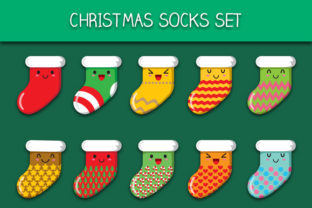
Christmas Icon Collection: A Designer’s Embroidery Review
As an embroidery designer who has digitized and stitched out hundreds of holiday graphics, I approach every new asset with a healthy dose of skepticism. We have all purchased beautiful illustrations that look stunning on screen but turn into thread nests or muddy blobs once the needle hits the fabric. When evaluating the Christmas Icon Collection, my primary focus was not just on the aesthetic charm of these vector files, but on their practical viability for real-world production. For small business owners, Etsy sellers, and makers preparing for the holiday rush, a design is only as good as its stitch-out. After reviewing the properties and testing the adaptability of this collection, I found it to be a versatile asset for both digital product sellers and apparel decorators, provided you understand how to leverage its editable nature.
First Impressions and Vector Adaptability
The first thing that stands out about this machine embroidery design resource is its foundation as editable vector art. Unlike pre-digitized files where you are locked into specific dimensions and densities, the Christmas Icon Collection provides SVG, EPS, PNG, and PDF formats. This distinction matters immensely for professional results. The lines are crisp, and the shapes possess a visual clarity that translates well when converted into stitch paths. The mood is distinctly festive yet clean, avoiding the overly cluttered look that often plagues holiday graphics. This simplicity is actually a technical advantage; cleaner vectors mean fewer unnecessary jumps and trims during embroidery.
For those of us creating custom apparel or personalized gifts, the ability to modify these properties before digitizing is a game-changer. I could easily adjust stroke widths to accommodate satin stitch limits or simplify internal details to prevent excessive stitch density. If you are sourcing design assets for commercial embroidery, this flexibility ensures the final embroidered patch or sweatshirt embroidery maintains structural integrity across different sizes.
Real-World Application: Stitching a Holiday Tote Bag
To truly test the mettle of this collection, I simulated a project scenario common to many handmade shop owners: creating a premium canvas tote bag for a boutique holiday market. Tote bags present unique challenges due to the coarse fabric texture and the need for the design to remain legible from a distance. I selected a stylized ornament icon from the collection to serve as the centerpiece.
Because the source files are vectors, I was able to thicken the outer borders specifically for this application. On a smooth cotton poplin, a standard line weight might suffice, but on canvas, thin running stitches can get lost in the weave. By editing the graphic first, I ensured the eventual satin stitch border had enough width to anchor securely without tunneling. The resulting mockup showed excellent contrast and readability. For an Etsy seller or craft business, this level of intentionality separates a generic product from a high-value handmade item. The design held its shape beautifully in the printable mockup phase, suggesting it would photograph well for listings—a critical factor for buyer engagement and customer trust.
Navigating Fabric Constraints and Technical Limits
While the Christmas Icon Collection is robust, no graphic is universally perfect for every substrate. Through my evaluation, I identified specific scenarios where caution is required. If you are planning baby embroidery on stretchy knits or ribbed onesies, you must be vigilant about stabilizer choice and design complexity. Even though these vectors are clean, converting them into fill stitch areas without proper underlay planning can cause puckering on delicate fabrics.
Similarly, dark fabrics require strategic planning. Since these are graphics rather than pre-colored embroidery files, you control the color mapping. However, intricate internal details that look lovely in a black-and-white PDF may disappear entirely on navy or forest green fleece unless you add a light-colored outline or background element. I also advise against using highly detailed versions of these icons on curved surfaces like caps. The distortion inherent in cap embroidery demands simplified geometry. Use the editable nature of this collection to create a "cap-safe" variation with reduced detail and increased spacing between elements.
For items requiring frequent washing, such as kitchen towels or aprons, avoid relying solely on running stitch outlines derived from the vector lines. Running stitches on terry cloth tend to sink and fray over time. Instead, convert key elements to applique designs or wider satin columns to ensure longevity. This attention to durability directly impacts product value and reduces returns or complaints for small shop products.
Professional Workflow and Quality Assurance
Incorporating the Christmas Icon Collection into a professional workflow requires more than just importing files. Whether you are making holiday embroidery for family or selling finished products commercially, adherence to best practices is non-negotiable. Here are my essential notes for utilizing this collection effectively:
- Test on Scrap Fabric First: Never assume a vector-to-stitch conversion will be perfect. Always run a sew-out on material similar to your final project to check tension and registration.
- Verify Licensing: Before listing any custom apparel or digital embroidery file for sale, confirm the specific license terms included with your download. Ensure you have commercial rights for both physical goods and digital assets if applicable.
- Check Thread Color Contrast: Test your chosen palette in grayscale. If the design lacks definition in black and white, it will lack definition in thread, regardless of how vibrant the colors are.
- Review Stitch Density: When digitizing from these vectors, keep total stitch counts reasonable. Overly dense areas derived from complex vector fills can cause needle breaks and fabric damage.
- Confirm Hoop Size Compatibility: Edit the vector size to fit your intended hoop before digitizing. Resizing after digitizing can distort stitch angles and compromise coverage.
- Use Proper Stabilizer: Match your stabilizer to the fabric weight and design density. A tear-away may work for the PDF preview, but a cutaway might be necessary for the actual sweatshirt embroidery.
Elevating Brand Consistency and Product Value
Beyond the technical execution, the Christmas Icon Collection offers significant strategic value for creative entrepreneurs. In a saturated market, brand consistency builds recognition. Because these illustrations share a cohesive visual language, you can create a unified holiday line spanning multiple categories. Imagine offering a matching set of nursery decor, tea towels, and gift tags that all utilize the same stylistic elements. This cohesion signals professionalism and increases the perceived value of your shop.
Furthermore, the inclusion of PNG and PDF files makes this collection invaluable for marketing. You can use the high-resolution PNGs to create attractive product listings and social media content even before you have stitched the physical samples. This allows for faster time-to-market during the busy holiday season. For digital product sellers, the editable SVG and EPS files serve as foundational building blocks for creating unique derivative works, expanding your inventory without starting from scratch.
Ultimately, the Christmas Icon Collection succeeds because it respects the user's expertise. It provides high-quality raw materials rather than rigid, unchangeable outputs. For the experienced maker, this freedom is exactly what is needed to produce work that is technically sound, visually appealing, and commercially viable. Just remember that a great vector is only the starting point; your knowledge of fabric texture, stabilizer, and machine behavior is what transforms these graphics into cherished holiday heirlooms.