Christmas Socks Set: A Designer’s Embroidery Review
As a professional embroidery digitizer and product reviewer, I approach every new graphic with a specific question: will this actually stitch out well, or is it just a pretty picture on a screen? When evaluating the Christmas Socks Set, my primary focus is translating these digital illustrations into tangible, high-quality embroidered goods. While the product description highlights compatibility with Cricut and Silhouette cutting machines for vinyl and paper crafts, my assessment looks strictly at its viability as a machine embroidery design for commercial and personal textile projects.
Visual Personality and Holiday Mood
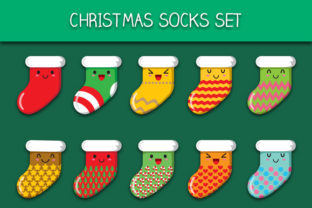
The first impression of the Christmas Socks Set is undeniably cozy. The illustrations carry a nostalgic, traditional holiday aesthetic that immediately suggests warmth and comfort. As graphics, they possess a charming hand-drawn quality that avoids looking overly clinical or corporate. For an Etsy seller or boutique owner, this visual personality is crucial. Customers aren't just buying a sock motif; they are buying the feeling of a quiet Christmas morning. The shapes appear balanced, which is a good sign for digitizing, but the true test lies in how those lines translate to thread.
In terms of layout, the set seems versatile enough to work as individual elements or a grouped composition. This flexibility is essential for custom apparel and personalized gifts where space constraints vary wildly between a baby bib and an adult sweatshirt. The mood strikes the right balance between playful and classic, making it suitable for both children’s holiday embroidery and sophisticated adult winter wear.
Real-World Application: Stitching a Custom Sweatshirt
To truly evaluate this design, I mentally placed it in a real-life production scenario: creating a premium holiday sweatshirt for a small shop product line. Sweatshirt embroidery requires careful consideration of fabric texture and stabilizer choice because fleece and French terry can be unforgiving. When adapting the Christmas Socks Set for this application, I would treat the original vector files (SVG, AI, EPS) as a blueprint rather than a final stitch file.
For a sweatshirt project, I would likely utilize a combination of fill stitch for the main body of the socks to provide coverage against the textured fabric, while reserving satin stitch for outlines or key details like cuffs and heels. Running stitch could add delicate texture to mimic knitting patterns within the illustration. The goal is to ensure the design doesn't sink into the fleece. If the original graphics have extremely thin lines, they must be thickened during the digitizing process to prevent needle breaks and ensure visibility on a heavy garment. This specific use case highlights why checking stitch density is non-negotiable before committing to a full production run.
Fabric Compatibility and Technical Caution Zones
Not all fabrics welcome intricate holiday graphics equally. Based on the visual complexity typical of sock illustrations, there are specific environments where the Christmas Socks Set demands caution.
- Stretchy Knits: If applying this to stretchy t-shirts or lightweight baby clothes, you must use appropriate stabilizer. Without adequate support, the stitch density required to render the sock details could cause puckering or distortion.
- Textured Surfaces: On tea towels or linen, the design may perform beautifully due to the tight weave. However, on chunky knits or boucle, fine details might get lost. You may need to simplify the design assets for these substrates.
- Curved Items: Caps and curved tote bag panels present alignment challenges. Ensure the hoop size accommodates the entire design without requiring re-hooping, as registering multi-color holiday designs on curved surfaces is technically demanding.
- Dark Fabrics: White or light-colored socks on dark fabric require a solid underlay or background fill stitch to prevent the fabric color from bleeding through the threads. This increases stitch count significantly.
Small hoop sizes are another limitation. If the Christmas Socks Set includes intricate patterns within the socks themselves, scaling them down too far for a 4x4 hoop could result in muddy details. Always verify the minimum viable size before purchasing for small-format machines.
Impact on Product Value and Customer Trust
For creative entrepreneurs and handmade shop owners, the quality of your embroidery directly correlates to perceived value. A clean, professional stitch-out of the Christmas Socks Set signals competence. When customers see crisp edges, proper registration, and thoughtful thread colors, their trust in your brand increases. Conversely, a design that pulls, gaps, or lacks definition suggests mass-produced low quality.
This set has strong potential for enhancing giftability. Holiday embroidery carries emotional weight. Whether used for a personalized gift for a grandmother or a boutique product for a seasonal pop-up, the recognizable sock motif triggers positive associations. For digital product sellers offering printable mockups, ensuring the graphics look realistic when overlaid on fabric textures helps buyers visualize the finished product accurately, reducing return rates and increasing engagement.
Critical Designer Notes Before You Stitch
Before loading the Christmas Socks Set into your machine or listing it in your shop, adhere to these practical protocols:
- Verify File Formats: The provided SVG, DXF, AI, PNG, and EPS formats are excellent for cutting machines and digitizing software, but they are not native embroidery files (like PES, DST, or JEF). You must either digitize them yourself or hire a professional digitizer to create a stitch-ready file. Do not assume auto-digitizing will yield commercial-grade results for complex illustrations.
- Test on Scrap Fabric: Never stitch a new design directly onto a sellable item. Test the embroidery file on the exact fabric and stabilizer combination you intend to use. Check for registration issues, thread breaks, and density problems.
- Evaluate Thread Colors: Holiday designs often rely on specific reds, greens, and whites. Compare your thread palette against the original graphics. Sometimes a slightly warmer red or a cream white stitches out better than a stark primary color.
- Check Licensing: Confirm whether your purchase includes commercial rights for selling finished embroidered products versus just the digital assets. This distinction is vital for Etsy sellers and craft business owners.
- Mockup Testing: Use the PNG or SVG files to create black and white mockups alongside color versions. This reveals whether the design relies too heavily on color contrast rather than structural stitching clarity.
Final Thoughts for Makers and Sellers
The Christmas Socks Set offers a delightful foundation for holiday projects, provided it is treated with technical respect. Its strength lies in its evocative illustration style that resonates with the season's spirit. However, success depends entirely on proper translation from vector graphic to stitch file. By understanding stitch density, fabric behavior, and hooping requirements, you can transform these digital assets into heirloom-quality embroidered patches, custom apparel, and cherished holiday gifts. Always prioritize the integrity of the stitch-out over speed, and your handmade products will reflect the care and professionalism that today’s market demands.