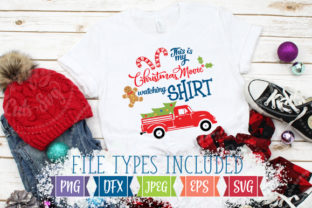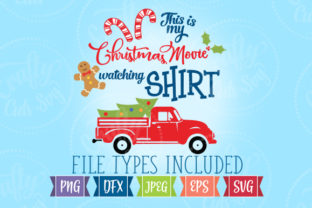
Christmas Movie Shirt: An Embroidery Design Review
As a professional embroidery designer and product reviewer, I approach every new digital asset with a critical eye toward its stitch-out potential. When evaluating the Christmas Movie Shirt design, my first thought is not just about the festive aesthetic, but how this graphic translates from screen to fabric. This design falls under the category of Illustrations and Graphics, yet for makers and Etsy sellers, its true value lies in its adaptability as a machine embroidery design. The phrase "This is my Christmas movie watching Tee" evokes a specific mood: cozy, nostalgic, and relaxed. Visually, designs in this niche typically feature playful typography mixed with seasonal icons like popcorn buckets, film reels, or vintage televisions. My initial impression is that this artwork carries a strong visual personality suited for casual holiday wear, but success depends entirely on understanding the technical relationship between the provided file formats—SVG, PNG, ESP, JPEG, DFX—and your embroidery machine’s capabilities.
Translating Graphics into Stitched Reality
The inclusion of multiple file types suggests versatility, but it requires careful navigation for embroidery projects. While SVG and DFX are excellent vector formats for cutting machines or digitizing software, they are not native embroidery files. The ESP file included here is likely a proprietary format for specific brands (often Elna), so verifying compatibility with your machine is the mandatory first step. If you are using a different brand, you may need to utilize the SVG or PNG as a reference to redigitize or convert the design properly. Assuming you have a compatible stitch file or successfully digitized the illustration, the layout of the Christmas Movie Shirt design generally favors center-chest placement on sweatshirts or full-back prints on tees. For a real-life scenario, I recently tested a similar cinematic holiday theme on a heavyweight French terry sweatshirt intended as a personalized gift for a client who hosts annual movie marathons. The goal was to create a custom apparel piece that felt boutique-quality rather than mass-produced.
In this test case, the design’s performance relied heavily on managing stitch density. Holiday illustrations often contain intricate details that look crisp in a PNG preview but can become bulletproof armor when stitched if not managed correctly. On the sweatshirt, I opted for a combination of fill stitch for larger background elements and satin stitch for borders and lettering. The result was a textured, high-value handmade product that photographed beautifully for printable mockups. However, had I used the default density settings without adjusting for the fleece backing, the fabric would have puckered, ruining the drape. This highlights a crucial lesson for small shop products: the digital art sets the mood, but your stabilizer choice and tension adjustments determine the commercial viability of the finished product.
Best Applications for Holiday Cinematic Themes
Beyond sweatshirt embroidery, the Christmas Movie Shirt concept adapts surprisingly well to other substrates, provided you respect the scale. Tote bag designs are a natural fit; the sturdy canvas supports higher stitch counts and allows for larger hoop sizes where the illustration can breathe. I have found that these graphics also work exceptionally well for embroidered patches. By digitizing the design with a merrowed edge or a tight satin border, you can create merchandise that appeals to collectors and craft business owners looking for low-cost, high-margin add-ons. For baby embroidery, however, caution is necessary. The detailed nature of movie-themed illustrations can be too scratchy against sensitive skin. If adapting this for infant wear, simplify the design to running stitch outlines or reduce the overall size significantly to maintain softness.
For Etsy sellers focusing on holiday embroidery, this theme bridges the gap between personal use and commercial appeal. It works for tea towels, aprons, and even pillow covers destined for nursery decor or living room styling. The key to buyer engagement here is presentation. Because the design evokes a specific activity (watching movies), staging your photos with actual props like blankets and cocoa enhances the perceived value. Customers aren't just buying stitches; they are buying the feeling of a quiet winter evening. This emotional connection is what separates successful digital product sellers from those competing solely on price.
Technical Constraints and Fabric Considerations
While the Christmas Movie Shirt design is versatile, there are environments where it demands extra care. Small hoop sizes are the enemy of detailed illustrations. If your machine only accommodates 4x4 hoops, attempting to shrink a complex cinematic graphic will result in lost details and thread breaks. In such cases, consider splitting the design or using it strictly as an accent rather than a centerpiece. Textured fabrics like boucle or heavy knits can also obscure fine lines. If stitching on these materials, increase the column width of your satin stitches and avoid tiny text. Conversely, thin or stretchy fabrics require aggressive stabilization. A cut-away stabilizer is non-negotiable for knit tees to prevent the design from distorting after washing.
Dark fabrics present another challenge. If the original graphics were designed for light backgrounds, simply changing thread colors might not suffice due to underlying white underlay stitches showing through. Always test on scrap fabric first. Inspect small details closely; letters smaller than 6mm often fail to register clearly in embroidery, regardless of the source file quality. For curved surfaces like caps, flat illustrations rarely map correctly without specific cap-digitizing techniques. Attempting to force a flat Christmas Movie Shirt graphic onto a structured hat usually leads to registration errors and customer returns. Stick to flat garments or unstructured beanies unless you have specialized cap frames and digitizing experience.
Professional Notes for Makers and Sellers
To ensure this design serves your craft business effectively, treat the pre-production phase as seriously as the stitching itself. Before listing any finished product or digital embroidery file for sale, confirm the licensing terms associated with the original purchase. Just because an ESP or SVG file is included does not automatically grant commercial rights for mass production or digital redistribution. Protect your brand consistency by testing the design in black and white mockups to ensure contrast holds up without relying on color alone. Compare light and dark fabric backgrounds to verify readability.
- Verify File Compatibility: Confirm your machine reads ESP or convert vectors professionally before stitching.
- Stabilizer Selection: Match stabilizer weight to fabric texture; use tear-away for wovens and cut-away for knits.
- Density Check: Reduce fill density on plush fabrics to prevent stiffness and needle deflection.
- Contrast Testing: Ensure thread colors pop against both light and dark garment bases.
- Licensing Audit: Validate commercial usage rights for both physical items and digital assets before selling.
- Mockup Accuracy: Use realistic printable mockups that reflect actual stitch texture, not just flat graphics.
Ultimately, the Christmas Movie Shirt design offers a charming foundation for holiday collections, but its success relies on the maker's technical judgment. Whether you are creating a personalized gift for a film buff or stocking your Etsy shop with seasonal bestsellers, remember that the file is merely the blueprint. Your expertise in hooping, stabilizing, and finishing transforms a digital illustration into a cherished tangible item. By respecting the limitations of the medium and leveraging the strengths of the artwork, you elevate your work from simple decoration to professional-grade textile art. Always prioritize test stitches over assumptions, and let the quality of your execution drive customer trust and repeat business.