Christmas Gingerbread Set: A Designer’s Review
First Impressions and Holiday Aesthetic
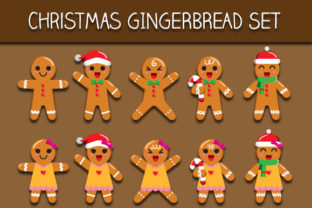
When evaluating the Christmas Gingerbread Set for potential use in a professional embroidery workflow, my immediate focus is on the translation from digital graphic to stitched reality. As an experienced designer, I look past the initial charm of the illustration to assess its structural integrity as a machine embroidery design. This set captures a quintessential holiday mood with whimsical shapes and nostalgic details that immediately suggest warmth and tradition. However, because this product is originally categorized under Illustrations and Graphics for cutting machines like Cricut or Silhouette, it requires a critical eye before being adapted for needle and thread.
The visual personality of this gingerbread theme is undeniably strong. It evokes feelings of homemade comfort, making it a natural candidate for holiday embroidery projects ranging from kitchen textiles to children's apparel. The layout typically features distinct silhouettes and decorative elements that work well as standalone motifs or combined scenes. For a crafter or Etsy seller, this aesthetic is gold; it signals "handmade" and "personalized gift" instantly to buyers browsing seasonal listings. Yet, the transition from a vector SVG or PNG file to a viable embroidery file demands careful consideration of line weight and negative space.
Real-World Application: Stitching a Custom Tote Bag
To truly understand the utility of the Christmas Gingerbread Set, I recently approached it with a specific project in mind: creating a premium canvas tote bag for a boutique holiday collection. My goal was to produce a tote bag design that felt artisanal rather than mass-produced. Canvas is a forgiving fabric texture, but it can swallow fine details if the digitizing isn't optimized.
In this real-life scenario, I treated the original graphics as a blueprint for a hybrid applique design. Instead of attempting to replicate every pixel of the original illustration with dense fill stitches—which would result in a stiff, bulletproof patch—I used the gingerbread man silhouette as an applique shape secured with a satin stitch border. The smaller details, such as icing swirls and gumdrop buttons, were rendered with running stitches and minimal fill areas. This approach maintained the lightweight drape of the tote bag while ensuring the design remained legible from a distance. The result was a finished product that balanced commercial appeal with handmade softness, proving that this set can anchor a profitable small shop product when executed with technical intention.
Best Use Cases for Apparel and Home Decor
Beyond tote bags, the Christmas Gingerbread Set shows immense versatility across various substrates. For custom apparel, particularly sweatshirt embroidery, the design serves as an excellent chest logo or back print alternative. Sweatshirts provide a stable base for slightly denser stitching, allowing for more intricate facial expressions or icing patterns without distorting the garment. When targeting the baby embroidery market, however, scale and safety become paramount. On onesies or bibs, I recommend simplifying the design significantly. Remove tiny detached elements that could pose choking hazards or cause puckering on stretchy knits. A single, bold gingerbread figure often outperforms a complex scene on infant wear.
For home decor enthusiasts and makers, this set shines in tea towels and pillow covers. These items are often viewed up close, allowing customers to appreciate finer stitching details. An embroidered patch version of this design also opens doors for denim jackets and caps, expanding your inventory without requiring new digitizing from scratch. Digital product sellers can also leverage the included SVG, DXF, AI, and PNG formats to create high-quality printable mockups. Showing potential clients how the graphic looks alongside a stitched sample builds trust and demonstrates the dual utility of these design assets.
Navigating Technical Limitations and Fabric Choices
While the Christmas Gingerbread Set is charming, it is not immune to production pitfalls. Designers must be vigilant when working with textured fabrics like terry cloth or fleece. Deep pile textures can obscure the clean lines typical of gingerbread illustrations. In these cases, using a water-soluble topping stabilizer is non-negotiable to keep stitches crisp. Similarly, stretchy fabrics require cut-away stabilizers to prevent registration issues where the icing lines fail to align perfectly with the cookie body after hooping.
Small hoop sizes present another challenge. If you are adapting this graphic for a 4x4 hoop, resist the urge to shrink the entire composition. Instead, isolate individual elements. Tiny lettering or sub-3mm satin columns will disappear or tunnel. Dark fabrics also demand attention; ensure your thread colors have sufficient contrast against black or navy backgrounds, as gingerbread tones can sometimes blend into dark material, reducing visual impact. Always verify the licensing terms before selling. While the files are great for personal crafts, confirming commercial rights is essential for any Etsy seller or business owner planning to monetize the digital embroidery file or finished goods.
Professional Notes for Digitizing and Production
Before committing the Christmas Gingerbread Set to a final run, adhere to these professional best practices to ensure quality and profitability:
- Test on Scrap Fabric First: Never stitch directly onto a sellable item without a test run. Check how the design interacts with your specific stabilizer and fabric combination.
- Evaluate Stitch Density: Since this originates as a graphic, you may need to manually adjust density settings. Overly dense fills cause puckering; sparse fills show fabric underneath. Aim for balanced coverage.
- Check Thread Color Contrast: View your thread palette in natural light. Gingerbread brown needs distinct separation from cinnamon or tan accents to maintain definition.
- Confirm Hoop Size Compatibility: Measure the actual stitch area, not just the bounding box. Ensure adequate margin for your machine’s presser foot clearance.
- Inspect Small Details: Zoom in on your embroidery software. Any element thinner than 1mm may need to be converted to a running stitch or removed entirely.
- Mockup Testing: Create black and white versions of your design preview. If the image reads clearly without color, your stitch placement and contrast are solid.
- Verify Licensing: Double-check whether the purchase includes commercial rights for both physical products and digital resale. Protect your craft business by staying compliant.
- Stabilizer Selection: Match stabilizer weight to fabric weight. Lightweight cottons need tear-away; performance wear needs poly-mesh cut-away.
Elevating Brand Value Through Thoughtful Execution
Ultimately, the success of the Christmas Gingerbread Set lies not just in the artwork itself, but in the maker’s ability to interpret it for their specific medium. A well-executed embroidery project using this set communicates professionalism and care. Customers can feel the difference between a hastily converted file and a thoughtfully digitized design. When stitch clarity is high and fabric distortion is low, perceived value increases. This directly impacts buyer engagement and repeat sales for handmade shops.
Whether you are creating a personalized gift for a family member or stocking your online store with holiday merchandise, treat this graphic as a foundation rather than a finish line. By respecting the technical requirements of machine embroidery and adapting the illustration to suit your chosen substrate, you transform simple vectors into cherished textile art. The Christmas Gingerbread Set offers a wonderful starting point for festive creativity, provided it is handled with the precision and practical judgment that defines true craftsmanship.